

Table of Contents
- Why Pet Hair Builds Up Faster in Small Spaces
- Best Tools for Removing Pet Hair from Furniture
- Daily Pet Care Routine for Busy Owners
- Preventative Measures to Reduce Shedding
- Managing Multiple Pets in Limited Space
- Quick Wins for Immediate Results
- Frequently Asked Questions
Last Updated: October 4, 2026
Why Pet Hair Builds Up Faster in Small Spaces
Small apartments create the perfect storm for pet hair accumulation. Your living space becomes saturated quickly because air circulates less efficiently, and every surface, sofas, carpets, curtains, sits within arm's reach of where your pet sleeps, plays, and sheds. The problem compounds if you have multiple pets. What would spread across a larger home concentrates in a compact area, making the issue feel more urgent and harder to manage.
The real challenge isn't the shedding itself. It's that small spaces give pet hair nowhere to go. Dust settles faster on fewer surfaces. Hair clings to fabrics more noticeably because there's less visual space to absorb it. This is why managing pet hair in small apartments demands a different approach than what works in larger homes, you need systems that work harder and faster.
Understanding this reality is the first step. You're not dealing with a minor inconvenience. You're managing a continuous cycle that requires daily intervention, not weekly cleaning. The good news: targeted tools and routines make this manageable, even with limited space.
Best Tools for Removing Pet Hair from Furniture
The right tools make all the difference when you're trying to manage pet hair in small apartments. Your furniture bears the brunt of shedding, so investing in effective removal solutions pays dividends.
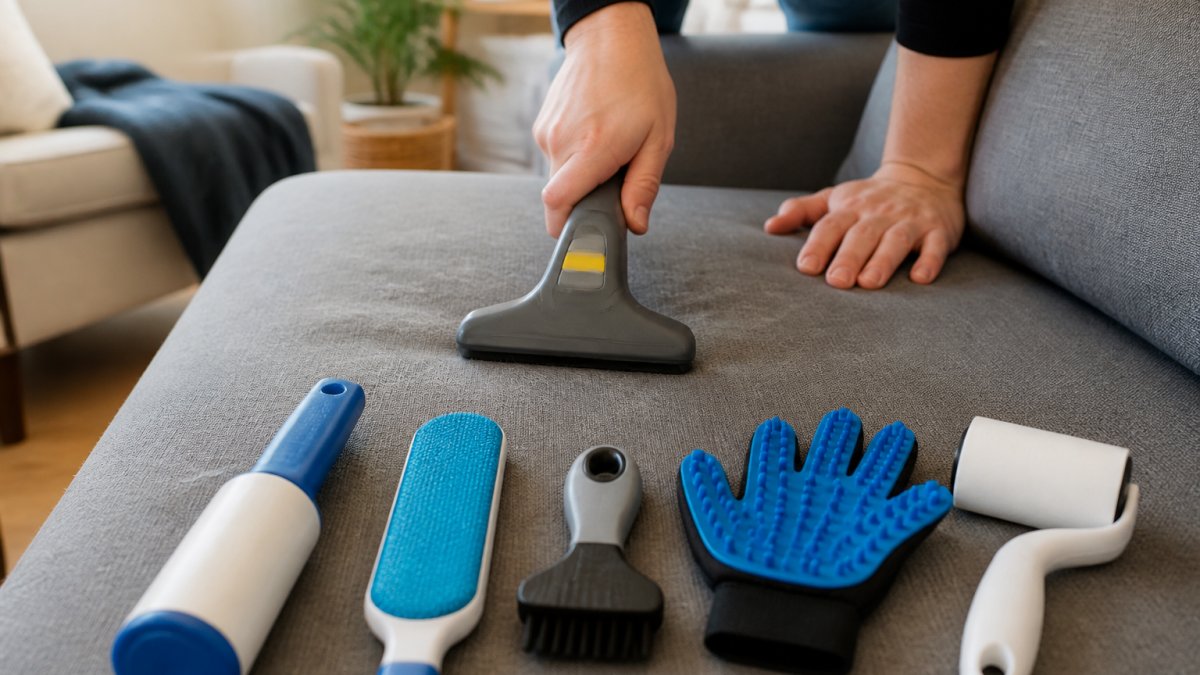
Handheld Hair Removers
A handheld hair remover is your first line of defence. These tools work through a simple mechanism: you scrape them across fabric surfaces, and they collect loose hair without damaging upholstery. The best part is they require no batteries, no electricity, and no complicated setup.
The BlimPet™ Hair Remover is designed exactly for this purpose. It features an ergonomic wooden handle paired with pure copper blades, making it durable enough for daily use. The tool is lightweight and portable, so you can keep it on your sofa arm or in a drawer for quick touch-ups throughout the day. At £19.99, it's a one-time investment that pays for itself through convenience alone.

How to use it effectively:
- Work in small sections, using firm but controlled pressure
- Scrape in one direction, then collect the gathered hair
- Empty the collected hair into a bin before moving to the next section
- Use it on cushions, armrests, and fabric-covered surfaces
The advantage over lint rollers is obvious: handheld removers collect significantly more hair per pass, and they don't require endless rolls of sticky tape. For small apartments where you're managing hair daily, this efficiency matters.
Vacuum and Lint Roller Solutions
A lightweight cordless vacuum designed for upholstery is invaluable. Look for models with motorised brush heads, which agitate fabric fibres and lift embedded hair more effectively than standard attachments. Keep one accessible in your main living area rather than storing it in a cupboard, convenience drives consistent use.
Lint rollers remain useful as a backup, particularly for clothing and quick spot-checks on furniture. However, they're not your primary tool for managing pet hair in small apartments. They work best for targeted touch-ups between deeper cleaning sessions.
Combine these approaches:
- Use your handheld remover for daily maintenance
- Deploy the vacuum weekly for deeper cleaning
- Keep lint rollers handy for clothing and final passes
This layered strategy prevents hair from building up to overwhelming levels.
Daily Pet Care Routine for Busy Owners
Consistency beats intensity. A short daily routine prevents the accumulation that makes pet hair feel unmanageable.
Morning Grooming and Brushing
Start your day by brushing your pet. This removes loose hair before it sheds onto your furniture and clothes. Spend just 5-10 minutes on this task, it's the single most effective prevention step you can take.
Brush your pet in a designated area, ideally near a window or outside if weather permits. Collect the brushed hair immediately and dispose of it. This simple habit removes a massive volume of hair before it becomes a problem.
For cats and dogs with longer coats, use a slicker brush or undercoat rake. These tools penetrate deeper than standard brushes and collect significantly more loose hair. The investment in a quality brush (£15-25) pays for itself through reduced cleanup time.
Evening Cleaning and Hair Containment
After your pet has been active during the day, spend 10 minutes doing a quick furniture sweep with your handheld remover. Target the sofa, armchairs, and any fabric surfaces where your pet spent time. This prevents hair from settling into fibres overnight and becoming harder to remove.
Contain shedding by designating specific pet zones. Use washable throws or blankets on furniture where your pet typically sits. These are far easier to shake out and wash than trying to clean upholstery directly. Change or wash these covers weekly.
Evening routine checklist:
- Brush your pet for 5-10 minutes
- Use the handheld remover on furniture
- Shake out and fold any pet blankets
- Sweep or vacuum high-traffic pet areas
This takes 20-30 minutes total and prevents hair from accumulating overnight.
Preventative Measures to Reduce Shedding
You can't stop shedding entirely, but you can reduce it through targeted care. A well-groomed, healthy pet sheds less noticeably than one with neglected coat maintenance.
Nutrition matters more than many pet owners realise. A diet rich in omega-3 and omega-6 fatty acids supports healthy skin and coat. Consult your vet about whether your pet's current food includes adequate levels of these nutrients. Better nutrition often means less shedding.
Regular bathing helps remove loose hair before it falls out naturally. Bathe your pet every 4-6 weeks using a quality pet shampoo. The bathing process itself loosens dead hair, which you then rinse away rather than having it shed around your home.
Hydration supports coat health. Ensure your pet has access to fresh water throughout the day. Proper hydration keeps skin healthy, which reduces excessive shedding.
Environmental factors matter too. Maintain consistent indoor temperature and humidity. Dry air can irritate skin and trigger increased shedding. A humidifier in winter helps, particularly in small apartments where air circulation is limited.
Managing Multiple Pets in Limited Space
Multiple pets in a small apartment means exponentially more hair. Your strategies need to scale accordingly.
Establish separate grooming schedules. Don't brush all your pets at once. Instead, groom one pet in the morning and another in the evening. This spreads the task across the day and prevents overwhelming amounts of loose hair being released simultaneously.
Increase your tool arsenal. If you have two pets, consider having two handheld removers, one in each main living area. This removes friction from your routine and encourages more frequent use.
Create dedicated pet zones for each animal when possible. If your cat has a preferred armchair and your dog prefers the sofa, you can manage shedding more strategically by focusing tools and preventative measures on specific areas.
Washing pet bedding becomes more critical. With multiple pets, you're dealing with more hair, more dander, and more opportunity for accumulation. Wash pet blankets and bedding every 5-7 days rather than weekly.
Quick Wins for Immediate Results
If you're overwhelmed by existing pet hair buildup, these quick wins deliver visible results within a day:
The 30-minute blitz: Spend 30 minutes with your handheld remover focusing only on high-visibility areas, the sofa, armchairs, and bedroom. You'll remove an enormous volume of hair and immediately feel the difference.
Wash all pet textiles: Strip your bed, wash all pet blankets, and wash your sofa throws. This single action removes a significant amount of accumulated hair and dander.
Vacuum with purpose: Use an upholstery vacuum attachment on every fabric surface. Don't rush. Work methodically through each room. The results are dramatic.
Groom aggressively: Brush your pet for 20-30 minutes, not 5. Collect all the loose hair that's ready to shed anyway. Your pet won't mind, and you'll remove hair before it becomes a problem.
These actions create a clean baseline. From there, your daily routine maintains the improvement.
Managing pet hair in small apartments is genuinely challenging, but it's entirely solvable with the right approach. The key is accepting that you need daily systems, not occasional deep cleans. Tools like the BlimPet™ Hair Remover make this manageable because they're designed for quick, efficient daily use. At BlimPet, we understand that busy pet owners need solutions that actually fit into their lives. Our curated selection of grooming tools and pet care essentials helps you maintain a clean, comfortable home while keeping your pet happy and healthy. Order now and discover how much easier pet ownership becomes when you have the right tools on hand.
Frequently Asked Questions
How often should I groom my pet to reduce hair in a small apartment?
Daily brushing is ideal for long-haired pets, whilst short-haired animals benefit from 3-4 times weekly. In small spaces, consistent grooming prevents hair from accumulating on furniture and floors. Even 10 minutes daily catches loose fur before it sheds, making daily pet care routines more manageable for busy owners.
What's the fastest way to remove pet hair from furniture when you're short on time?
Handheld hair removers like the BlimPet Hair Remover work quickly on sofas and chairs without requiring batteries or electricity. Simply scrape the tool across fabric surfaces, most people clear a sofa in under five minutes. Pair this with lint rollers for spot cleaning between deeper sessions.
Can I manage pet hair in a small apartment with just one pet, or does it require multiple tools?
One pet is manageable with two essential tools: a good brush for daily grooming and a handheld hair remover for furniture. The BlimPet Hair Remover costs £19.99 and handles most furniture cleaning needs. Most busy owners find this combination sufficient for daily maintenance without needing expensive equipment.
How do I stop my dog from shedding so much in my flat?
You cannot stop shedding entirely, but you can reduce it significantly through daily brushing, proper diet, and regular grooming. Brush your dog before they shed onto furniture, this catches loose fur at the source. In small apartments, this preventative approach makes the biggest difference in keeping hair manageable.


